Building muscle is a goal many people share, yet most are unsure how long it actually takes to see meaningful results. The truth is that muscle growth follows a predictable pattern, but the timeline depends on factors such as training quality, nutrition, sleep, genetics, and your starting level of experience. Some people notice early changes within a few weeks, while visible increases in muscle size usually take consistent effort over a longer period.
Understanding what affects your progress gives you the power to train with clarity and avoid the frustration that comes from unrealistic expectations. In this guide, you will learn how muscle growth works, what kind of results you can expect at each stage, and how to structure your training so you continue to make steady progress. Whether you are new to strength training or returning after a break, this breakdown will help you set realistic goals and train in a way that produces real, lasting changes.
How Long Does It Actually Take to Gain Muscle?
Building muscle is one of the most common fitness goals, yet the timeline varies widely from one person to another. Most beginners can expect to see noticeable changes within 4 to 8 weeks of consistent strength training, although the exact pace depends on training experience, nutrition, genetics, and recovery habits. During the first few weeks, strength often improves quickly because the nervous system becomes better at recruiting muscle fibers, which means the early progress comes from neuromuscular adaptation rather than visible increases in muscle size.
After this initial adaptation phase, realistic muscle gain typically ranges from 1 to 2 pounds per month for beginners, slowing to half a pound or less per month for advanced lifters. This phenomenon explains why someone new to resistance training experiences faster progress than someone who has been lifting for years. Understanding these timelines helps set realistic expectations and prevents frustration when progress inevitably slows.
How Your Body Builds Muscle
The Role of Muscle Protein Synthesis
Muscle growth happens when muscle protein synthesis rises above muscle protein breakdown, creating conditions that allow tissue to grow. Strength training creates small amounts of stress in the muscle fibers, which signals the body to repair and reinforce them. This repair process not only restores the muscle but also strengthens it by adding new proteins, which leads to gradual increases in size and strength. Muscle protein synthesis stays elevated for about 1 to 2 days after a workout, which is why steady training and consistent nutrition throughout the week are essential for progress.
To support this process, your body needs enough protein each day, generally in the range of 1.6 to 2.2 grams per kilogram of body weight. You also need sufficient calories to fuel recovery and growth. Without a small increase in daily energy intake, the body cannot efficiently build new muscle tissue, even if your training sessions are challenging and consistent.
Neuromuscular Adaptation in the First Few Weeks
When you first begin a strength training program, the most dramatic improvements happen in your nervous system rather than your muscles themselves. Your central nervous system becomes more efficient at recruiting motor units, coordinating muscle group activation, and generating force. This neuromuscular adaptation explains why beginners often see their strength double within the first month without significant changes in muscle mass.
This phase is crucial because improved movement quality and coordination lay the foundation for future muscle gains. Better technique means you can safely handle heavier loads, creating the progressive overload necessary for hypertrophy training. While you might not see much visible muscle definition in these early weeks, the internal adaptations are preparing your body for the muscle growth phase that follows.
The Difference Between Hypertrophy Types
Here is what you need to know about the two main types of muscle hypertrophy:
- Myofibrillar hypertrophy increases the size and number of the contractile proteins inside muscle fibers. It produces denser and stronger muscles and responds well to heavier loads in lower rep ranges such as three to six repetitions.
- Sarcoplasmic hypertrophy increases the fluid and energy substrates inside the muscle cell, including stored glycogen. It creates a fuller appearance but does not produce strength gains in the same proportion as myofibrillar growth.
Most effective training programs use both forms of hypertrophy by combining different rep ranges and training volumes throughout the week. Heavier compound lifts tend to develop myofibrillar density, while higher repetition isolation work with moderate rest periods promotes sarcoplasmic expansion.
Why Recovery Drives Half of Your Progress
Recovery is responsible for a large share of your muscle growth because the stress from resistance training is only the signal for change, while the actual repair and rebuilding take place during rest. Without enough recovery time, the body stays in a state of breakdown rather than adaptation.
Sleep is especially important since growth hormone reaches its highest levels during deep sleep, and poor sleep patterns can disrupt this environment while increasing cortisol, which may work against muscle development. Light mobility work, hydration, and effective stress management further support the recovery process. Many people focus heavily on their workouts but overlook the quality of their sleep and rest days, and this imbalance often explains stalled progress even when training appears consistent and intense.
Personal training services
4 Factors That Affect How Fast You Can Build Muscle
1. Training Experience and Movement Quality
Training status is one of the strongest predictors of how quickly you can gain muscle. Beginners who have never used resistance training can add muscle at a much faster rate than intermediate lifters because their bodies respond more readily to new training demands. This early advantage gradually fades as you gain experience. A person in their first year of consistent training may add 15 to 20 pounds of lean mass, while an experienced lifter may see only a few pounds of growth over the course of a year.
Movement quality is just as important as the amount of training you perform. Using proper form ensures that each exercise targets the intended muscles and reduces the chance of injury. Poor technique limits the effectiveness of every repetition and increases the risk of setbacks that disrupt consistent training, which is the true driver of long term progress.
2. Age, Sex, and Hormone Levels
Testosterone plays an important role in muscle protein synthesis, which helps explain why men often gain muscle more quickly than women and why building muscle can become more challenging after the age of 40 when testosterone levels begin to decline. These differences are smaller than many people assume, because women are fully capable of developing significant strength and visible muscle.
Age related changes involve more than hormone levels. Older adults may experience a reduced muscle protein synthesis response to training, need longer recovery time between sessions, and face a greater risk of injury. Even with these factors, resistance training remains extremely effective at any age. The timeline simply becomes longer.
3. Genetics and Body Type Differences
Genetic factors influence everything from muscle fiber type distribution to hormonal profiles to bone structure and insertion points. Some individuals naturally have a higher proportion of fast-twitch muscle fibers, which have greater growth potential than slow-twitch fibers. Others have favorable muscle belly length and insertion points that create better leverage for certain movements.
While you cannot change your genetics, understanding your natural tendencies helps set realistic expectations and optimize your training approach. Someone naturally lean might struggle to maintain a calorie surplus, while someone who gains weight easily might need to carefully balance muscle building with fat loss to achieve their desired physique.
4. Lifestyle Factors: Sleep, Stress, and Recovery
Chronic stress elevates cortisol levels, which directly interferes with muscle protein synthesis and can accelerate muscle atrophy. High-stress individuals often struggle to gain muscle despite perfect training and nutrition because their hormonal environment works against their goals. Managing stress through meditation, adequate leisure time, and addressing life circumstances becomes part of the muscle-building equation.
Sleep deprivation might be the most underestimated barrier to muscle growth. Studies show that sleeping less than 7 hours nightly can reduce muscle gains by 30 % or more compared to adequate sleep. Your sleep schedule should be as non-negotiable as your training routine if you’re serious about results.
How to Choose the Best Personal Trainer in Vancouver
How to Train Properly for Faster Muscle Gain
How Many Sets, Reps, and Weekly Sessions You Need
Personal trainers generally recommend a weekly total of 10 to 20 sets for each major muscle group to provide an effective stimulus for muscle growth. This workload can be spread across 2 to 4 sessions depending on your schedule and how well you recover. For most people, training each muscle group twice a week with 5 to 10 sets per session offers a strong balance between challenge and recovery.
Repetition ranges are less rigid than once believed, yet working within 6 to 20 repetitions per set remains highly effective for building muscle. Lower repetitions help develop strength, which supports continued progression in weight, while higher repetitions increase training volume and create useful metabolic stress. The most successful programs use a mix of these approaches, adjusting intensity over the course of the week to target multiple growth pathways while avoiding excessive fatigue.
Why Progressive Overload Controls Your Results
Progressive overload, the gradual increase of training demands on your musculoskeletal system, is the essential principle that drives muscle growth. However, progressive overload should only be applied once you can perform each exercise with consistent and controlled technique. Increasing weight at the expense of proper form raises injury risk and does not meaningfully improve muscle development. Progress does not require adding weight every session. Sustainable improvement can come from adding a single repetition to each set over the course of a week or adding a small amount of weight over the course of a month.
Many people stall because they mistake repeated effort for actual progression, performing the same routine with the same loads for long stretches of time. True progressive overload involves tracking your lifts, planning how each exercise will advance, and including occasional deload periods that allow the body to recover fully before reaching for higher performance. This structured approach ensures steady improvement rather than long term plateaus.
Best Exercises for Hypertrophy (Compound and Isolation)
Both compound and isolation exercises are very effective for building muscle. Choosing which movements to include in your training routine depends on several personal factors. These include your current exercise skill, your available range of motion, and the proportions of your body such as the relative length of your limbs and the size of your torso. All of these elements influence how naturally you can perform each exercise and how well you can target the muscles you want to develop.
How Long Should Your Workouts Be?
Effective hypertrophy sessions generally last 45 to 75 minutes, including warm up and cool down, and extending far beyond this window does not improve results and may interfere with recovery. The most important factor is the quality of work you can maintain throughout the session. If your performance drops sharply during the final exercises, the workout is likely too long or the total volume is more than you can recover from. Rest periods should also support your goals, with 2 to 3 minutes for demanding compound lifts and roughly 1 to 1,5 minutes for isolation movements that focus on muscle growth.
Nutrition Guide for Muscle Growth
- Aim for a consistent calorie intake that supports training and recovery, since a small surplus is often needed to build new muscle tissue.
- Prioritize daily protein intake, generally 0.73 to 1 gram per pound of body weight, to support muscle repair and growth.
- Include enough carbohydrates to fuel training sessions and restore glycogen, with extra carbs placed before and after workouts for better performance and recovery.
- Add healthy fats from foods such as nuts, seeds, olive oil, and fatty fish to support hormone production and overall health.
- Stay well hydrated throughout the day, especially before and after training, to support performance and recovery.
- Consider supplements that have strong evidence for muscle growth, such as creatine and whey protein, when they fit your goals and daily routine.
Is Eating Before or After a Workout Better?
Muscle Gain Timelines for Different People
How Long It Takes Beginners to Build Muscle
Beginners often experience the fastest rate of muscle growth, commonly known as newbie gains, with noticeable changes appearing within the first four to eight weeks of consistent training. During the first year, it is realistic to gain 15 to 25 pounds of muscle with effective training and nutrition, although some individuals may gain even more.
One of the strongest influences on muscle growth is a person’s genetics together with their ability to remain consistent with training stimulus, recovery, and nutrition. Early progress is also supported by improvements in technique and by better coordination within the nervous system, while visible muscle definition usually begins to appear during the second or third month.
Intermediate and Advanced Lifters
Intermediate lifters with 1 to 3 years of training usually gain 5 to 10 pounds of muscle over a full year, and results require careful planning because progression becomes more difficult. Training volume must increase, recovery needs grow, and visual changes appear more slowly. Advanced lifters with several years of dedicated training often add only a few pounds of muscle each year. At this stage, improvements come from refining weak points rather than increasing overall size.
Muscle Gain Timeline for Women
Women build muscle at a similar rate relative to body size, although total muscle gain is usually lower because of hormonal differences. A female beginner may add 8 to 12 pounds of muscle in the first year, which is comparable to male progress when adjusted for body weight. Visible changes follow a similar timeline for all lifters, with noticeable improvements in 4 to 8 weeks and significant definition within 3 to 6 months. With proper training, nutrition, and consistency, women can achieve substantial and impressive muscle development.
Building Muscle After Age 40
Muscle building after 40 remains highly achievable, although it requires greater attention to recovery and movement quality. The body responds well to resistance training at any age, but recovery between sessions takes longer and poor technique increases injury risk. Visible changes often take 4 to 6 months rather than 2 to 3, yet the results are meaningful and lasting. Many people over forty make excellent progress through consistent training, patient progression, and a structured approach that respects recovery needs.
Download Your Guide to More Muscle, Less Fat
Why You Might Not Be Gaining Muscle
- Insufficient training volume: Fewer than 10 sets per muscle group weekly doesn’t provide adequate stimulus for growth, even with perfect nutrition and recovery. The only exception is in cases of extremely high intensity training, where sets are taken to absolute failure.
- Lack of progressive overload: Using the same weights and reps week after week leaves no reason for your body to adapt and build new muscle fibers
- Inadequate protein intake: Consuming less than 0.64 grams per pound each day limits muscle protein synthesis regardless of training quality.
- Insufficient calorie intake: Training in a calorie deficit or at maintenance makes muscle building extremely difficult for most people. The only exception applies for beginners who are overweight and have more body fat. In that case they can still build muscle not only at maintenance but even at a caloric deficit as they can use their stored body fat as a source of energy.
- Poor recovery and sleep: Chronic sleep deprivation and inadequate rest days prevent the muscle repair process from completing
- Inconsistent training schedule: Missing workouts frequently or changing training routine every few weeks prevents adaptations from accumulating
- Too much aerobic exercise: Excessive cardio volume can interfere with recovery and create an energy deficit that limits muscle gains
- Unmanaged stress and cortisol: High stress levels suppress muscle protein synthesis and can lead to muscle atrophy despite training
- Unrealistic expectations: Comparing yourself to enhanced athletes or expecting beginner-phase gains to continue indefinitely leads to perceived failure despite actual progress
- Insufficient exercise variety: Neglecting certain muscle groups or movement patterns creates imbalances and limits overall muscle building potential
How Personal Training in Vancouver Can Speed Up Muscle Gain
Customized Training and Technique Coaching
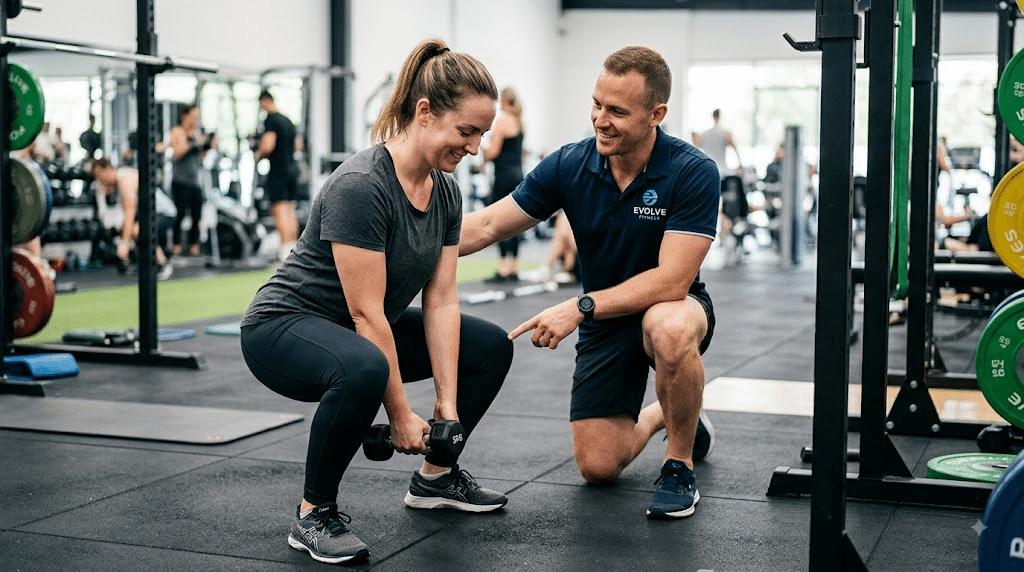
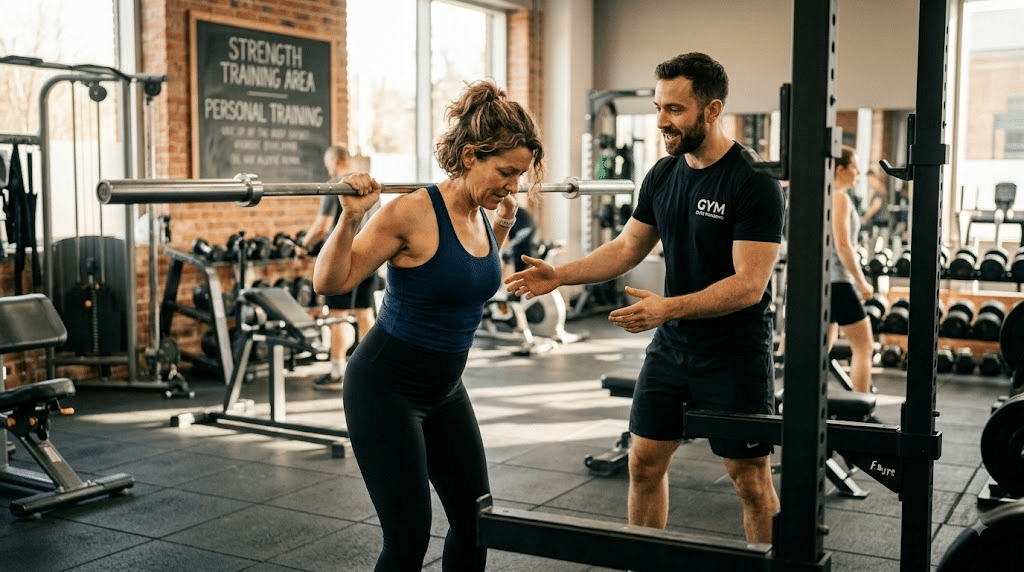
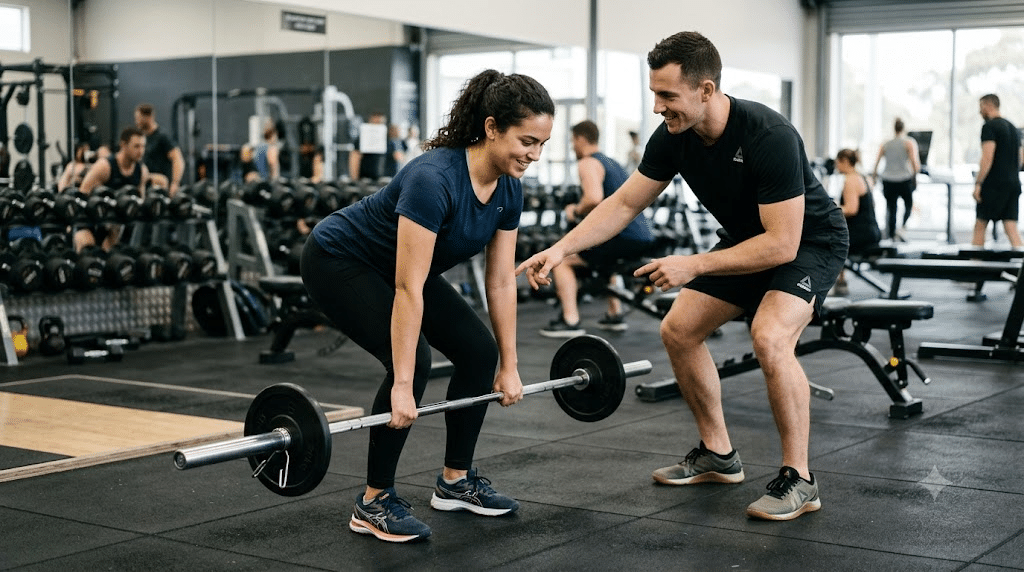
A personal trainer removes the guesswork from muscle building by creating a custom program that matches your goals, experience level, and individual movement patterns. Instead of following general routines, you receive exercises, set and rep targets, and progression methods that fit your body and recovery needs. Proper technique coaching ensures that each movement stimulates the intended muscle while lowering the chance of injury, and a skilled trainer can spot compensations or imbalances before they limit your progress.
Evidence-Based Progression and Injury Prevention
A qualified trainer uses proven progression methods to help you advance at a sustainable pace. They understand when to increase weight, when to add sets, and when to pull back so your body can recover. This careful planning prevents both plateaus and training related fatigue. Trainers also reduce injury risk by identifying limitations in mobility or strength and correcting problem areas early, which keeps you training consistently and allows real progress to accumulate over time.
Accountability and Weekly Adjustments
Consistency is one of the strongest predictors of muscle growth, and regular sessions with a trainer create structure and commitment. Beyond accountability, fitness trainers monitor your performance and adjust your plan when progress slows, making changes based on how your body is actually responding. This ability to adapt the program each week helps you move forward more quickly than following a fixed routine on your own.
Online Coaching Options for Busy Schedules
Online coaching offers expert guidance for people who want professional programming without the limits of location or schedule. You receive a personalized training plan, technique support through video review, nutrition guidance, and regular check ins that help keep progress on track. This approach is especially effective for lifters who already have good movement skills but need structured programming and expert adjustments to continue improving.
Frequently Asked Questions About Muscle Building
How much muscle can you gain in one month?
Most people can gain about 1 to 2 pounds of lean muscle in a month with consistent strength training, sufficient protein intake, and a small calorie surplus. This usually reflects a total weight gain of roughly 2 to 5 pounds once water, glycogen, and other tissues are accounted for. There are exceptions, especially among individuals with very favorable genetics, who may be able to achieve muscle gains closer to double this rate.
Does cardio slow muscle growth?
Cardio does not slow muscle growth when it is moderate and balanced with strength training. Excessive cardio without adequate calories may reduce progress.
Can women build muscle as fast as men?
Women can build muscle effectively at a similar relative rate, though total muscle gained is usually lower due to hormonal differences rather than training ability.
Can you build muscle after 40?
Yes, muscle building after 40 is completely achievable. It may require longer recovery periods and careful programming, but results are significant with consistent training.
Do beginners gain muscle faster?
Beginners gain muscle faster than experienced lifters because their bodies respond strongly to new training stimulus, producing noticeable changes within a few weeks.
How long should a hypertrophy workout be?
A hypertrophy focused workout typically lasts 45 to 75 minutes, which allows for quality training volume without excessive fatigue.
Personal Training Services in Vancouver
Iron Lab provides a customized and results driven approach for anyone looking to gain strength, build muscle, improve mobility, or enhance overall fitness with expert guidance. Each program is tailored to your goals, experience level, and lifestyle, ensuring every workout is efficient, safe, and aligned with proven training principles.
Our coaches focus on proper technique, progressive training methods, and consistent accountability, helping you stay motivated and confident as you move toward your goals. Whether you prefer in person sessions in Vancouver or the flexibility of online coaching, Iron Lab delivers structured programming, ongoing support, and measurable progress that far exceeds what most people achieve on their own.